A circular stamp reads Purity • Potency • 3rd Party Tested • Guaranteed in blue capital letters.

BATCH

PURITY

99% HPLC

Glutathione

Cellular RepairLongevity

$120.00

Volume Pricing Guide

QUANTITY PRICE PER
1 $120.00
2 - 4 $108.00
5 - 9 $102.00
10 - 14 $96.00
15 - 19 $90.00
20 + $84.00

Only the lyophilized product is provided. For research use only. All supplies sold separately.  

Section divider line

Summary

Injectable glutathione is a cornerstone therapy for supporting cellular detoxification, oxidative balance, and visible skin quality while simultaneously strengthening systemic resilience. As the body’s primary endogenous antioxidant, glutathione plays a central role in neutralizing free radicals, recycling other antioxidants, and maintaining optimal cellular function across all major organ systems¹⁻³. When delivered by injection, glutathione bypasses gastrointestinal breakdown, allowing for rapid bioavailability and consistent systemic exposure. Clinically, this manifests as improved energy regulation, enhanced liver and immune function, and—of particular interest—progressive improvements in skin tone, clarity, and brightness driven by reduced oxidative stress and modulation of melanogenesis⁴⁻⁶. Rather than acting as a superficial cosmetic agent, injectable glutathione improves skin appearance by optimizing the internal biological environment that determines skin quality.

Research Recommendations

Section divider line

Description & Pharmacodynamics

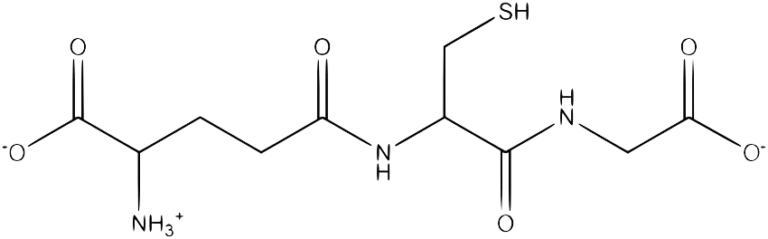
Glutathione is a tripeptide composed of glutamate, cysteine, and glycine, present in high concentrations within healthy cells. It functions as a master regulator of redox balance, detoxification pathways, and mitochondrial protection¹⁻³. Injectable administration enhances and stabilizes systemic glutathione levels, supporting multiple interconnected processes:

  • Cellular Detoxification: Serves as a critical cofactor for phase II liver detoxification enzymes, enhancing clearance of toxins, heavy metals, and metabolic byproducts¹⁻⁴.
  • Oxidative Stress Reduction: Neutralizes reactive oxygen species (ROS) and regenerates vitamins C and E, protecting cellular membranes, proteins, and DNA²⁻⁴.
  • Skin Brightening & Tone Optimization: Shifts melanin production toward lighter pheomelanin pathways and reduces oxidative triggers of hyperpigmentation⁵⁻⁷.
  • Mitochondrial & Immune Support: Preserves mitochondrial efficiency and supports balanced immune signaling, contributing to improved energy and recovery⁶⁻⁸.

Through these mechanisms, injectable glutathione supports both internal function and outward appearance as integrated expressions of cellular health.

Section divider line

Research Insights

Detoxification & Liver Function
Glutathione is essential for hepatic detoxification, acting through glutathione S-transferase (GST) pathways to conjugate and eliminate toxins. Injectable delivery has been shown to rapidly replenish depleted intracellular glutathione stores, particularly under conditions of oxidative or toxic burden¹⁻⁴.

Oxidative Stress & Cellular Protection
Low glutathione levels are associated with accelerated aging, chronic inflammation, and mitochondrial dysfunction. Restoration of glutathione improves redox balance and protects tissues from cumulative oxidative damage²⁻⁵.

Skin Brightening & Cosmetic Optimization
Clinical studies demonstrate that glutathione reduces melanin synthesis by inhibiting tyrosinase activity and shifting melanogenesis pathways. Over time, this results in improved skin luminosity, more even tone, and reduced appearance of hyperpigmentation⁵⁻⁷. These effects are systemic and cumulative, reflecting internal antioxidant optimization rather than surface-level alteration.

Immune & Recovery Support
Glutathione modulates cytokine signaling and supports lymphocyte function, contributing to improved immune balance and recovery from physical or metabolic stress⁶⁻⁸.
Section divider line

Structure

  • Chemical Name: L-γ-Glutamyl-L-cysteinylglycine
  • Molecular Formula: C₁₀H₁₇N₃O₆S
  • Molecular Weight: 307.32 g/mol
  • Peptide Class: Endogenous tripeptide antioxidant
Section divider line

Citations for Glutathione

  1. Lu, S. C. (2013). Glutathione synthesis. Biochimica et Biophysica Acta, 1830(5), 3143–3153.
  2. Forman, H. J., et al. (2009). Glutathione: Overview of its protective roles. Molecular Aspects of Medicine, 30(1–2), 1–12.
  3. Pompella, A., et al. (2003). The changing faces of glutathione. Biochemical Pharmacology, 66(8), 1499–1503.
  4. Townsend, D. M., et al. (2003). The importance of glutathione in human disease. Biomedicine & Pharmacotherapy, 57(3–4), 145–155.
  5. Weschawalit, S., et al. (2017). Glutathione and skin lightening: Evidence and mechanisms. Journal of Dermatological Treatment, 28(5), 437–443.
  6. Handog, E. B., et al. (2016). Oral and injectable glutathione in dermatology. Clinical, Cosmetic and Investigational Dermatology, 9, 9–13.
  7. Villarama, C. D., & Maibach, H. I. (2005). Glutathione as a depigmenting agent. International Journal of Dermatology, 44(12), 1031–1036.
  8. Morris, G., et al. (2014). The role of glutathione in immune regulation. Molecular Neurobiology, 50(3), 1059–1076.

**Note:** This product is intended for research purposes only and not for human consumption. Always consult with a healthcare professional before starting any new supplement or research product.

Researched Pairings