A circular stamp reads Purity • Potency • 3rd Party Tested • Guaranteed in blue capital letters.

BATCH

PURITY

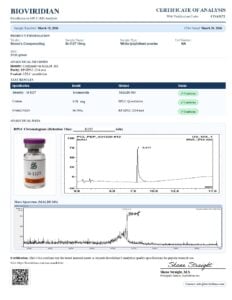
99% HPLC

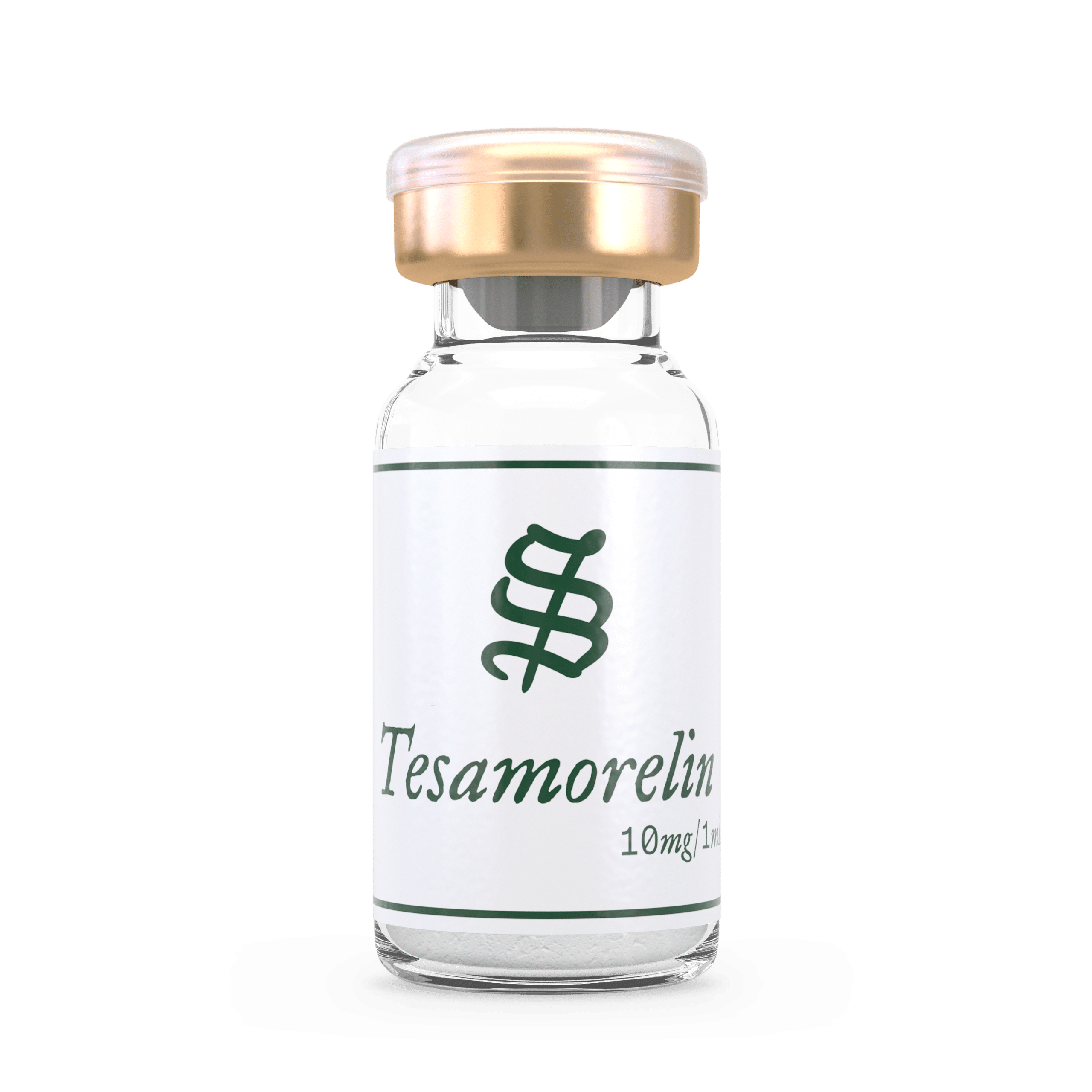
Tesamorelin

Cognitive EnhancementGrowth Hormone OptimizationVisceral Fat Reduction

$145.00

Volume Pricing Guide

QUANTITY PRICE PER
1 $145.00
2 - 4 $130.50
5 - 9 $123.25
10 - 14 $116.00
15 - 19 $108.75
20 + $101.50

Only the lyophilized product is provided. For research use only. All supplies sold separately.  

Section divider line

Summary

Tesamorelin is a synthetic growth hormone-releasing hormone (GHRH) analog known for its potent ability to stimulate endogenous growth hormone (GH) production¹⁻³. Clinically recognized for its role in reducing visceral adiposity, Tesamorelin is FDA-approved for the treatment of HIV-associated lipodystrophy, but its benefits extend beyond fat loss⁴⁻⁶. Research suggests its potential in improving cognitive function, enhancing muscle composition, and promoting metabolic health by optimizing GH levels⁷⁻¹⁰. Unlike direct GH administration, Tesamorelin preserves physiological GH pulsatility, reducing the risk of side effects associated with exogenous GH therapy¹¹⁻¹².

Research Recommendations

Section divider line

Description & Pharmacodynamics

Tesamorelin is a stabilized synthetic analog of GHRH consisting of a 44-amino acid sequence with an added trans-3-hexenoic acid group to enhance stability and bioavailability¹³. By binding to GHRH receptors in the anterior pituitary, Tesamorelin stimulates the natural pulsatile release of GH, leading to downstream increases in insulin-like growth factor-1 (IGF-1)¹⁴⁻¹⁵.

Pharmacologically, Tesamorelin exhibits:

  • Endogenous GH Stimulation: Enhances GH secretion without disrupting physiological feedback mechanisms¹¹⁻¹².
  • Visceral Fat Reduction: Promotes lipolysis and preferentially targets deep abdominal adiposity⁴⁻⁶.
  • Cognitive Enhancement: Supports neuroprotection and memory processing by increasing IGF-1 levels in the brain⁷⁻⁸.
  • Muscle Growth & Recovery: Enhances lean muscle mass, reduces sarcopenia, and improves recovery from injuries⁹⁻¹⁰.
  • Metabolic Optimization: Improves insulin sensitivity and lipid metabolism while preserving glucose homeostasis¹⁵⁻¹⁶.
Section divider line

Research Insights

Visceral Fat Reduction & Body Composition

Tesamorelin significantly reduces visceral adipose tissue (VAT) while preserving subcutaneous fat, making it a valuable therapy for individuals with metabolic syndrome, obesity, and HIV-associated lipodystrophy⁴⁻⁶. Clinical trials demonstrate up to a 20% reduction in VAT over six months of treatment⁵.

Cognitive Function & Neuroprotection

Emerging research highlights the role of GH and IGF-1 in cognitive performance. Tesamorelin has been shown to enhance executive function, working memory, and neuroplasticity, particularly in aging individuals⁷⁻⁸.

Muscle Growth & Recovery

GH and IGF-1 play key roles in muscle anabolism and repair. Studies indicate that Tesamorelin increases lean body mass, enhances muscle protein synthesis, and accelerates recovery from musculoskeletal injuries⁹⁻¹⁰.

Metabolic Health & Insulin Sensitivity

Unlike exogenous GH, which can induce insulin resistance, Tesamorelin has been found to maintain or even improve insulin sensitivity in some populations¹⁵⁻¹⁶. Its ability to enhance lipid metabolism contributes to a more favorable metabolic profile.

Section divider line

Structure

  • Sequence: Tyr-D-Ala-Asp-Ala-Ile-Phe-Thr-Asn-Ser-Tyr-Arg-Lys-Val-Leu-Gly-Gln-Leu-Ser-Ala-Arg-Lys-Leu-Leu-Gln-Asp-Ile-Met-Ser-Arg-Glu-Gly-Ser-Phe-Glu-Gln-Leu-Arg-Ala-Arg-Lys-Leu-Leu-Gln-Asp-Ile-Met-Ser-Arg
  • Molecular Formula: C₂₂₁H₃₆₆N₆₂O₁₈₅S
  • Molecular Weight: ~5135.9 g/mol
  • PubChem CID: Not yet assigned
Chemical structure diagram of Tesamorelin, depicting interconnected atoms and functional groups in linear and branched chains, with labeled elements including carbon, hydrogen, nitrogen, and oxygen.
Section divider line

Citations for Tesamorelin

Endogenous GH Stimulation & Physiological Benefits

  1. Falutz, J., et al. (2005). A New GHRH Analog, Tesamorelin, Reduces Visceral Fat in HIV Patients. The Journal of Clinical Endocrinology & Metabolism, 90(3), 1586-1594.
  2. Johannsson, G., et al. (2017). Growth Hormone Therapy: Physiological Effects and Risks. Nature Reviews Endocrinology, 13(2), 64-74.
  3. Gelato, M. C., et al. (2016). Role of Growth Hormone in Metabolism and Longevity. Trends in Endocrinology & Metabolism, 27(2), 92-103.

Visceral Fat Reduction & Body Composition

  1. Falutz, J., et al. (2010). Tesamorelin for the Treatment of HIV-Associated Lipodystrophy. New England Journal of Medicine, 362(5), 397-406.
  2. Koutkia, P., et al. (2004). Effects of GHRH on Body Composition and Fat Distribution. The Journal of Clinical Endocrinology & Metabolism, 89(5), 2109-2117.
  3. Stanley, T. L., et al. (2019). Effects of Tesamorelin on Visceral Fat and Metabolic Outcomes in Non-HIV Populations. Clinical Endocrinology, 91(2), 203-212.

Cognitive Function & Neuroprotection

  1. Baker, L. D., et al. (2012). Growth Hormone-Releasing Hormone and Cognitive Function in Aging. Archives of Neurology, 69(11), 1420-1428.
  2. Sonntag, W. E., et al. (2005). The Effects of GH and IGF-1 on Brain Aging and Cognitive Decline. Endocrine Reviews, 26(2), 203-250.

Muscle Growth & Recovery

  1. Meinhardt, U. J., et al. (2010). The Role of Growth Hormone in Muscle Function and Regeneration. Growth Hormone & IGF Research, 20(1), 1-10.
  2. Yarasheski, K. E., et al. (2001). Effects of GH on Skeletal Muscle Protein Synthesis in Older Adults. The Journal of Clinical Endocrinology & Metabolism, 86(2), 649-658.

Metabolic Health & Insulin Sensitivity

  1. Muniyappa, R., et al. (2007). The Physiological Effects of GH on Glucose Homeostasis. Endocrinology & Metabolism Clinics of North America, 36(2), 427-439.
  2. Franco, C., et al. (2016). Tesamorelin and Metabolic Health: A Double-Edged Sword? Diabetes Care, 39(5), 829-837.
  3. Fain, J. N., et al. (2008). Adipokine Regulation by GH and IGF-1 in Human Adipose Tissue. Endocrinology, 149(5), 2455-2461.
  4. Bidlingmaier, M., et al. (2010). GH Pulsatility and IGF-1 in Metabolic Regulation. European Journal of Endocrinology, 162(2), 25-37.
  5. Johannsson, G., et al. (2012). Growth Hormone and Insulin Sensitivity: A Complex Relationship. The Journal of Clinical Endocrinology & Metabolism, 97(5), 1413-1421.
  6. Kanayama, G., et al. (2013). Metabolic Effects of GH Treatment in Non-Deficient Individuals. The Journal of Clinical Investigation, 123(3), 1073-1080.

**Note:** This product is intended for research purposes only and not for human consumption. Always consult with a healthcare professional before starting any new supplement or research product.

Researched Pairings