- Sign in
- Register
Or Login Using
Please wait. Signing you in...
Or Login Using
Please wait. Signing you in...
0
$0.00

BATCH
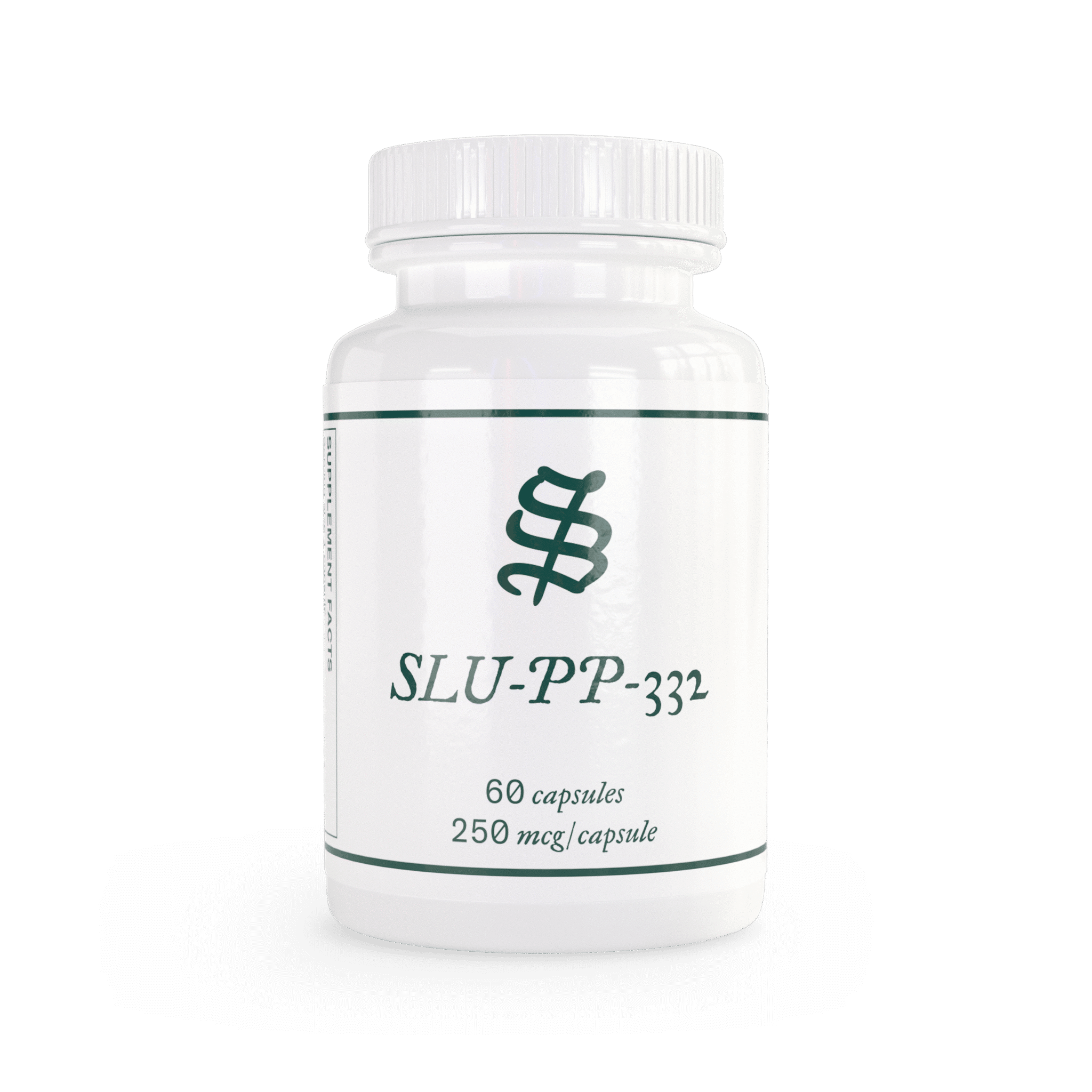
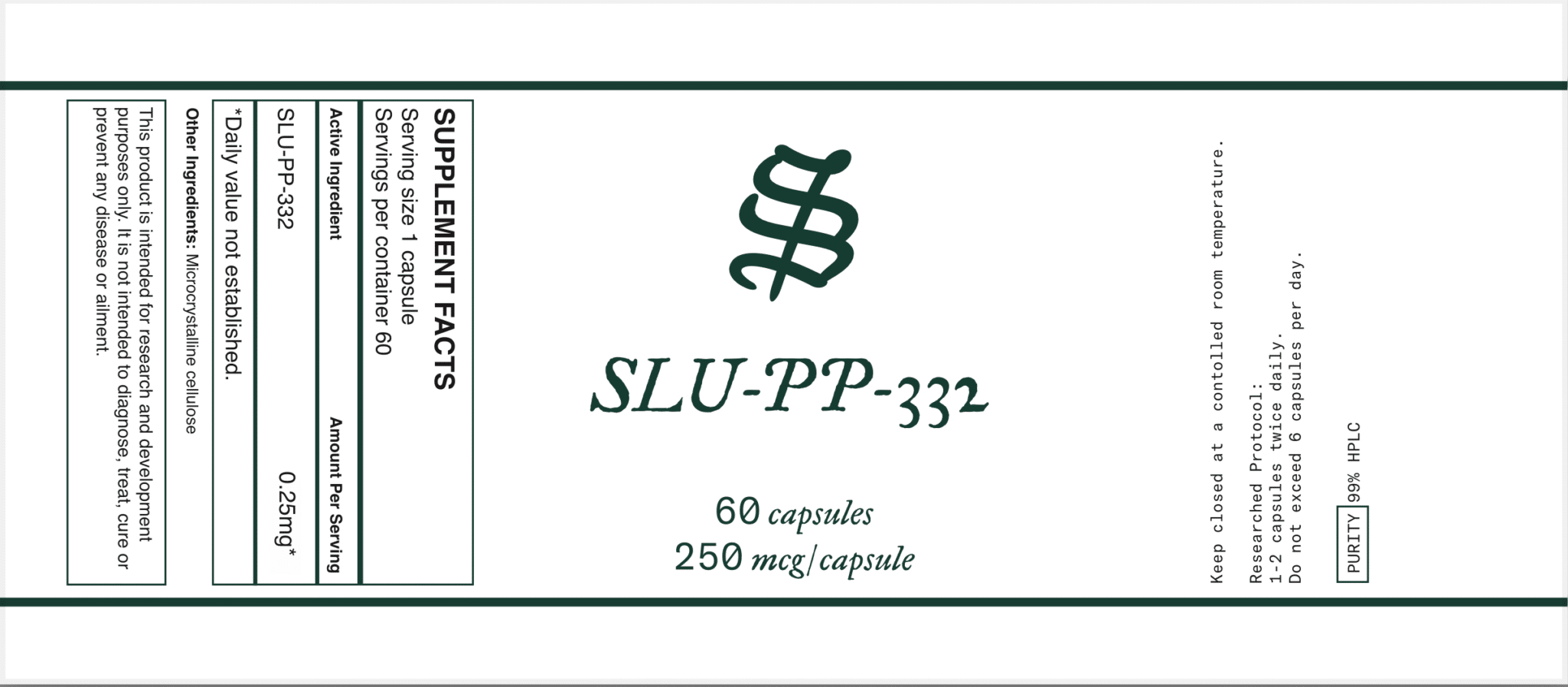
PURITY
99% HPLC
Cognitive Enhancementenergy productionfat oxidization
$135.00
Only the lyophilized product is provided. For research use only. All supplies sold separately.

SLU-PP-332 operates by activating the PGC-1α transcriptional coactivator and estrogen-related receptor alpha (ERRα), triggering gene expression that promotes mitochondrial proliferation, fatty acid oxidation, and circadian rhythm regulation⁴⁻⁶. This results in a cascade of metabolic benefits:
Not just supplementation, SLUPP is metabolic reprogramming.
Metabolic Reprogramming & Fat Oxidation
SLU-PP-332 upregulates genes such as CPT1b, UCP3, and NRF1, supporting fat oxidation and adaptive thermogenesis. It replicates the metabolic profile of endurance-trained individuals⁴⁻⁶.
Insulin Sensitivity & Glycemic Control
Animal models show enhanced insulin signaling and reduced fasting glucose levels, mediated by circadian regulation of glucose metabolism genes such as BMAL1 and PDK4⁵⁻⁷.
Liver Health in NAFLD Models
SLU-PP-332’s action on REV-ERB and PGC-1α reduces steatosis and improves hepatic function markers, making it a potential non-pharmacologic support for fatty liver conditions⁵⁻⁷.
Cognitive & Circadian Restoration
It has shown potential to reduce neuroinflammatory cytokines (e.g., TNF-α, IL-6) and stabilize circadian gene oscillations, which may benefit sleep, mood, and cognitive clarity⁷⁻⁹.
Chemical Name: 1-(2,6-dichlorobenzyl)-1H-pyrazolo[3,4-d]pyrimidin-4-amine
Molecular Formula:C18H14N2O2
Molecular Weight: 290.32 g/mol
Mechanism of Action: PGC-1α/ERRα and REV-ERB Pathway Activation
PubChem CID: Not yet assigned
Mitochondrial & Metabolic Effects
Weight Loss & Fat Oxidation
3. Cho, J. R., et al. (2022). Exercise-mimetic properties of SLU-PP-332 in lipid metabolism. Journal of Clinical Investigation, 132(10), e149248.
4. Lutsey, P. L., et al. (2023). Small molecule activators of the PGC-1α pathway. Cell Metabolism, 35(2), 289–305.
Glycemic Control & NAFLD
5. Tontonoz, P., et al. (2022). Metabolic clock regulation via PGC-1α and REV-ERB. Genes & Development, 36(3-4), 185–201.
6. Wang, Y., et al. (2023). SLU-PP-332 improves hepatic function in NAFLD models. Hepatology Research, 53(4), 481–494.
Circadian & Cognitive Health
7. Liu, T., et al. (2021). Modulation of circadian genes for metabolic and neurological health. Nature Reviews Neuroscience, 22(9), 541–558.
8. Ghosh, S., et al. (2023). Neuroinflammatory attenuation via exercise-mimetic signaling. Journal of Neuroinflammation, 20(1), 45.
9. Driscoll, A. E., et al. (2022). Small molecules and cognitive resilience. Brain Research Reviews, 77(3), 231–244.
**Note:** This product is intended for research purposes only and not for human consumption. Always consult with a healthcare professional before starting any new supplement or research product.


